Drop your two-year-old off at daycare and pick them up eight hours later, and it can look, on the surface, like they just played with blocks, ate snacks, and napped. Parents sometimes wonder if anything meaningful is actually happening in between, especially at an age when kids aren’t yet doing worksheets or reciting the alphabet.
The truth is a two-year-old in a quality daycare setting is absorbing an enormous amount, just not in ways that look like traditional learning. Here’s what’s actually happening during that toddler day, broken down by the specific skills being built.
Why Toddler Learning Doesn’t Look Like Learning
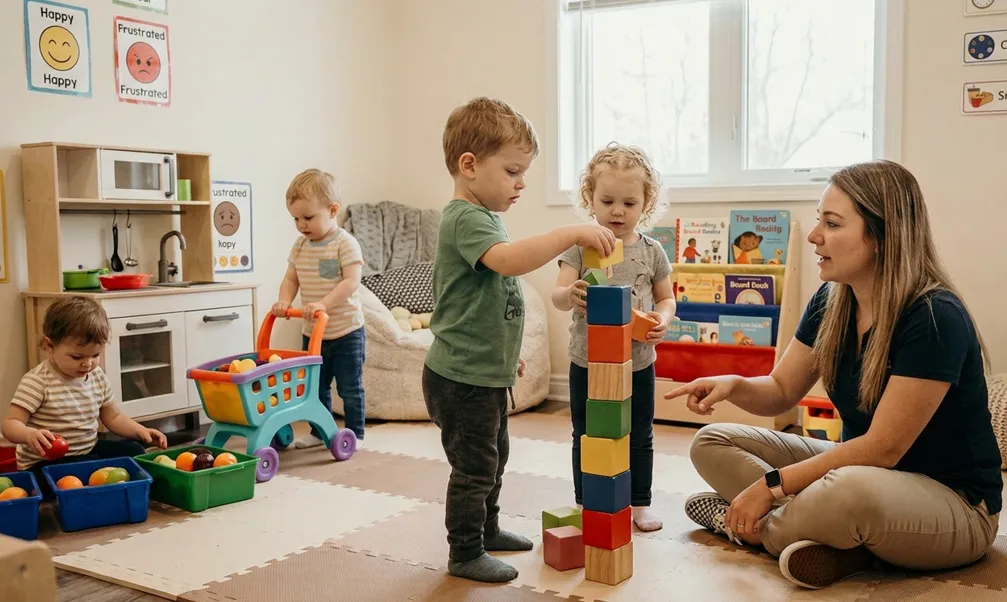
At two years old, the brain is developing faster than at almost any other point in life outside of infancy. But this learning happens through play, repetition, and social interaction, not instruction. A toddler stacking blocks isn’t just playing. They’re building spatial reasoning, hand-eye coordination, and an early understanding of cause and effect.
If you’re only looking for signs of academic learning, like letters or numbers, you’ll miss most of what’s actually happening at this age. Two-year-olds learn primarily through their bodies, their senses, and their interactions with peers and caregivers, not through direct instruction.
Language Development: More Happening Than You’d Expect
Two is a pivotal year for language explosion, and daycare settings tend to accelerate this more than many parents realize.
At daycare, your toddler is likely:
- Hearing new vocabulary from caregivers narrating activities throughout the day
- Picking up language patterns and new words from peers, sometimes faster than from adults alone
- Practicing simple back-and-forth exchanges during group activities like circle time
- Learning to name emotions with adult support, such as a caregiver saying “I see you’re frustrated” during a conflict
A strong toddler program intentionally builds language exposure into everyday routines, not just formal lesson time. Caregivers narrating diaper changes, meals, and play sessions expose toddlers to far more vocabulary in a day than most parents realize.
Social Skills: The Biggest Hidden Curriculum
This is where daycare offers something genuinely hard to replicate at home, even with the most attentive parent.
Two-year-olds in group care are learning:
- Parallel play transitioning toward interactive play. At two, most toddlers play next to peers rather than directly with them, but daycare accelerates the shift toward genuine interaction.
- Basic sharing and turn-taking, even if imperfectly and with plenty of caregiver support.
- Reading social cues from other children, like recognizing when a peer is upset or when it’s their turn to speak.
- Navigating small conflicts, such as disagreements over a toy, with caregiver guidance modeling how to resolve it.
- Group routine awareness, like understanding that circle time means sitting, or cleanup time means putting toys away.
These are not small things. Early social skill development at this age is one of the strongest predictors of how smoothly a child later adjusts to preschool and kindergarten environments.
Emotional Regulation: Learning to Handle Big Feelings
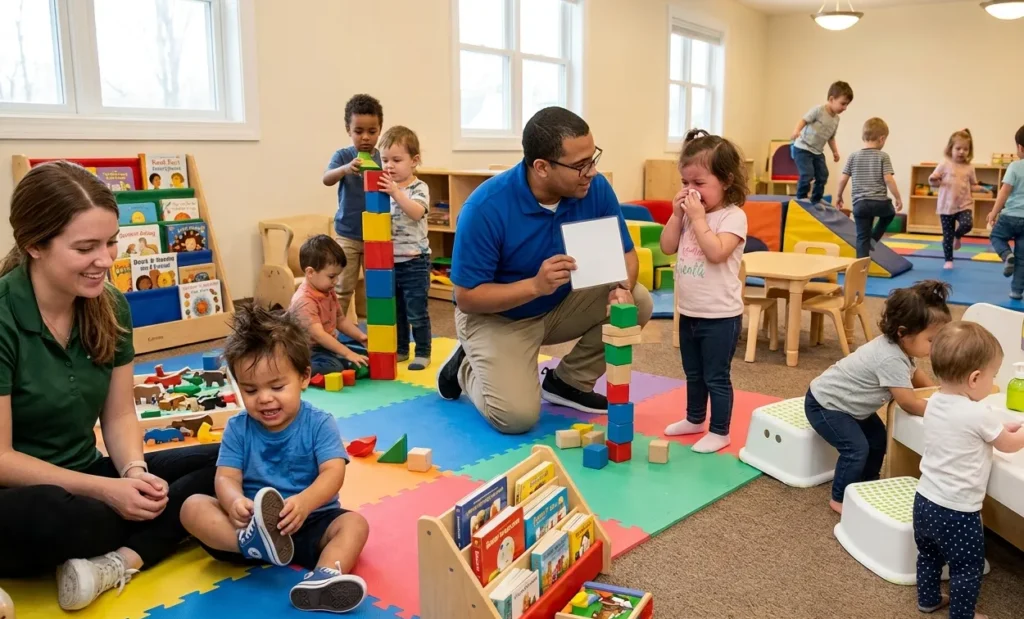
Two-year-olds are famous for big emotions and limited ability to manage them. Quality daycare settings actively work on this, often more consistently than happens at home simply due to caregiver training and repetition.
Caregivers in a well-run toddler classroom typically:
- Name emotions out loud to help toddlers build emotional vocabulary
- Model calm responses to frustration and meltdowns
- Redirect behavior consistently, which helps toddlers learn expectations through repetition
- Encourage simple coping strategies, like taking a breath or asking for help
This consistent, repeated modeling across a full day, five days a week, tends to build emotional regulation skills faster than occasional modeling at home alone, simply due to the volume of practice.
Fine and Gross Motor Skill Development
Physical development at two is happening constantly, and daycare environments are often designed specifically to support it.
Fine motor skills are built through activities like:
- Stacking and sorting toys
- Using crayons or chunky paintbrushes
- Practicing self-feeding with utensils
- Simple puzzle pieces and shape sorters
Gross motor skills develop through:
- Outdoor play, climbing, and running
- Group movement activities like dancing or simple obstacle courses
- Practicing balance on age-appropriate playground equipment
A good toddler classroom balances these deliberately throughout the day, rather than leaving physical development to chance.
Early Independence and Self-Care
This is one of the most overlooked areas of toddler learning, and one that often surprises parents most at pickup time.
At daycare, two-year-olds are commonly practicing:
- Washing their own hands with guidance
- Attempting to feed themselves with utensils, even messily
- Helping with simple cleanup tasks, like putting toys in a bin
- Taking early steps toward potty training, often supported directly by caregivers in partnership with parents
- Putting on simple items like shoes or a jacket with some assistance
Group settings tend to accelerate independence because toddlers see peers attempting these tasks and want to try themselves, something that’s harder to replicate one-on-one at home.
Sensory and Cognitive Development
Two-year-olds are natural sensory explorers, and quality programs build activities specifically around this.
Common sensory and cognitive activities include:
- Sensory bins with materials like rice, water, or sand for tactile exploration
- Simple cause-and-effect toys, like pushing a button to trigger a sound or light
- Basic sorting and matching activities by color or shape
- Music and rhythm activities that build early pattern recognition
These activities lay groundwork for later academic skills like counting and categorization, even though they don’t look academic at all in the moment.
How This Connects to Later Preschool and Kindergarten Readiness
The skills built during the toddler year form the direct foundation for what comes next. Social skills practiced at two make preschool program transitions smoother. Early language exposure builds toward the literacy foundations covered in more depth in our kindergarten readiness checklist. Emotional regulation practiced consistently at this age tends to ease separation anxiety in later transitions, a topic covered further in our guide on signs your child is ready for daycare.
What to Ask Your Toddler’s Daycare About Their Learning
If you want a clearer window into what your two-year-old is actually doing each day, ask your provider directly:
- Can you walk me through a typical day, activity by activity?
- How do you intentionally build language exposure into daily routines?
- What social skills are you specifically working on with this age group right now?
- How do you support emotional regulation during meltdowns or conflicts?
- What fine and gross motor activities are part of the regular schedule?
A provider with specific, detailed answers here is likely running an intentional program, not just supervising play. This is one of the signals covered in our broader guide on the signs of a high-quality daycare center.
What the Research Says
According to the CDC’s developmental milestones for two-year-olds, toddlers at this age are expected to begin using two to four word phrases, follow simple two-step instructions, and show growing independence, all of which align closely with what quality group care environments are designed to support. The Zero to Three organization, a leading early childhood development resource, similarly emphasizes that consistent, responsive caregiving during toddlerhood, whether at home or in group care, plays a critical role in long-term social and emotional outcomes.
The Bottom Line for Parents
What looks like simple play at pickup time is actually a full day of language exposure, social practice, emotional coaching, and physical development, layered together in a way that’s genuinely difficult to replicate through unstructured time at home alone. A quality toddler program isn’t just keeping your two-year-old safe and occupied. It’s actively building the foundation for nearly every skill they’ll need in the years ahead.
Frequently Asked Questions
What does a 2-year-old learn at daycare?
A two-year-old at quality daycare develops language skills, early social interaction, emotional regulation, fine and gross motor coordination, and independence with basic self-care tasks like handwashing and self-feeding. Most of this learning happens through play and repetition rather than direct instruction.
Is daycare good for a 2-year-old’s development?
Yes, quality daycare provides consistent social interaction, language exposure, and routine-based learning that can be difficult to replicate through unstructured time at home alone. The key factor is the quality of the specific program, including staff consistency and intentional daily activities.
How does daycare help with language development in toddlers?
Daycare exposes toddlers to new vocabulary through caregiver narration throughout the day, peer interaction, and structured activities like circle time and storytelling. This repeated exposure across a full day often accelerates language development compared to more limited exposure at home.
What social skills does a 2-year-old learn in daycare?
Two-year-olds in daycare practice sharing, turn-taking, reading social cues from peers, and navigating small conflicts with caregiver guidance. These early social skills form a direct foundation for smoother transitions into preschool and kindergarten later on.