Tracy sits at a strange crossroads. It’s technically part of the Central Valley, but a huge share of its households work commuter jobs Stockton, Livermore, Dublin, San Ramon, even the wider Bay Area. Tracy Unified School District campuses like Jefferson Elementary, Louis Bohn, Villalovoz, and Discovery-Bella Vista typically dismiss students between 2:30 and 3:15 PM, hours before most parents clock out. That gap sometimes three hours, sometimes more is where after school programs step in, and choosing the wrong one can quietly become one of the most stressful parts of a family’s routine.
This guide walks through everything a Tracy parent actually needs to evaluate before enrolling, not just the marketing pitch every provider gives.
Why After School Care Looks Different in Tracy Than in Other Cities
Cities with shorter commutes or more local employment don’t face the same scheduling squeeze Tracy families do. Here, the commute itself is often 45 minutes to over an hour each way. That changes what “good after school care” actually means:
- Pickup windows need to stretch later often to 6:00 or 6:30 PM because a parent leaving work at 5:00 in Dublin isn’t walking through the door until well past 6.
- Reliability matters more than flexibility. A program that’s occasionally short-staffed or inconsistent with hours creates real logistical chaos for a family with no slack in their schedule.
- Traffic-proof pickup policies grace periods and late fees structured around traffic reality, not a rigid 15-minute cutoff, make a meaningful difference for commuter households.
Understanding this local context is the first filter. A program built for a city with short commutes may look identical on paper but fail Tracy families in practice.
What a High-Quality After School Program Actually Includes
Most program websites list generic features “safe,” “fun,” “educational.” Here’s what those words should translate into on the ground.
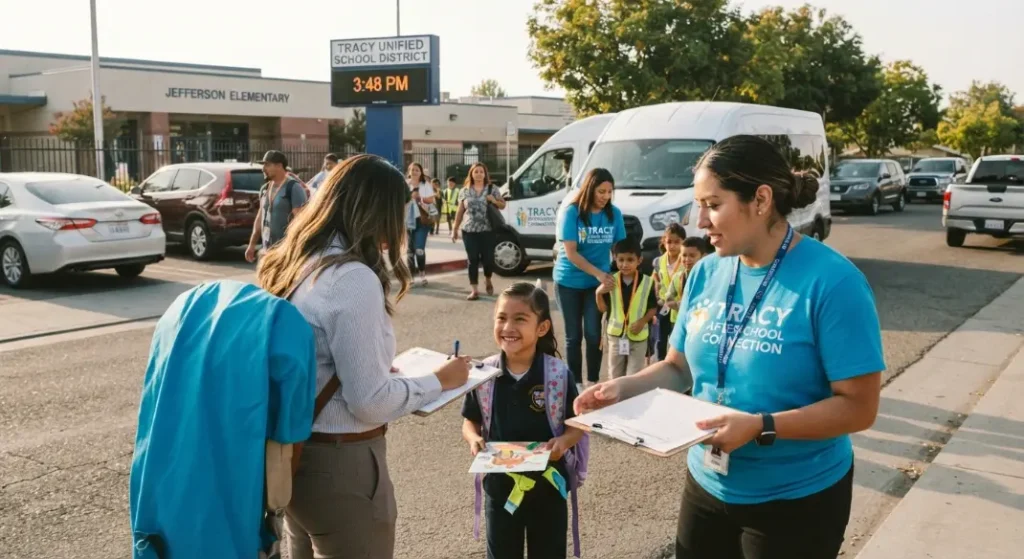
1. Structured Pickup From School
Confirm, specifically:
- Does staff pick up directly from your child’s TUSD campus, or is drop-off required?
- Is there a sign-out/sign-in log for safety and accountability?
- What happens if dismissal runs late (minimum days, assemblies, early release)?
Programs that coordinate directly with TUSD schools tend to run more predictably than those relying on parent drop-off after a separate school pickup.
2. Dedicated, Supervised Homework Time
A real academic block not a suggestion should be built into the daily schedule. Ask:
- Is there a fixed daily homework period, supervised by staff?
- Can staff actually help with grade-level work, or is it just quiet time?
- What happens on days without assigned homework free reading, workbooks, enrichment?
3. A Genuine Balance of Structure and Free Play
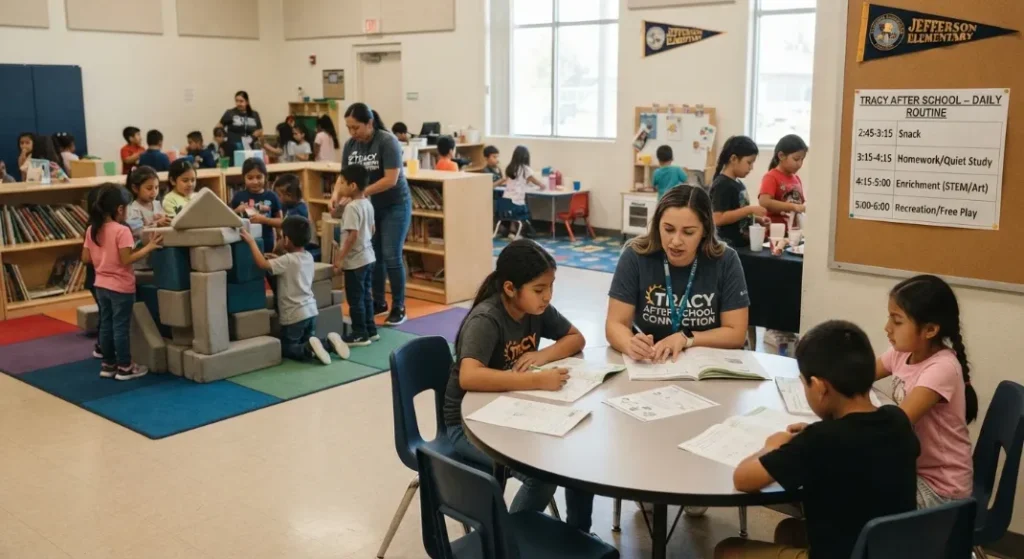
Children have already spent six-plus hours in a classroom. The strongest programs resist the urge to turn after school time into “school, part two.” Look for a published or visible daily schedule that mixes:
- Outdoor or gross-motor play
- Homework/academic block
- Snack time
- Enrichment (art, STEM activities, music)
- Unstructured social time
4. Age-Appropriate Grouping
A 6-year-old and an 11-year-old have almost nothing in common developmentally by 4 PM. Quality programs separate:
- Early elementary (K–2nd)
- Upper elementary (3rd–5th)
at least for portions of the day, even if the same overall space is shared.
5. Staff-to-Child Ratios
California’s Title 22 licensing sets minimum ratios, but “meeting the minimum” and “operating comfortably” are different things. Ask directly what the actual ratio looks like during peak hours (right after school dismissal), not just the licensed maximum.
Parent tip: Visit during actual pickup hours (3:00–4:00 PM), not during a scheduled tour slot. This is when you’ll see real staffing levels and how chaotic or calm the transition period actually is.
6. Break and Minimum-Day Coverage
TUSD has multiple minimum days, teacher in-service days, and extended breaks throughout the year. Ask specifically:
| Coverage Type | Question to Ask |
|---|---|
| Minimum days | Is full-day care available, or only after regular dismissal? |
| Winter/spring break | Is the program open, and is it billed separately? |
| Summer | Is there a transition to a summer program, or does care end? |
| Teacher in-service days | Full-day coverage available? |
Programs vague on this tend to leave families scrambling multiple times per school year.
Cost: What Tracy Parents Should Expect to Pay
After school program pricing in Tracy typically factors in:
- Days per week enrolled (full-time 5-day vs. part-time 2–3 day)
- Whether transportation/pickup is included or billed separately
- Registration or annual enrollment fees
- Late pickup penalties (often charged per minute after a grace period)
Always ask for the full written cost breakdown, not just the advertised monthly rate. Programs that avoid giving a straight answer on total cost including fees for holidays and late pickup tend to have unpleasant surprises down the line. If tuition transparency matters to you (it should), compare how openly a provider shares pricing before you tour.
Questions to Ask Before Enrolling
Bring this list to any tour or phone call:
- Do you pick up directly from [your child’s school]?
- What’s the actual staff-to-child ratio during the 3–4 PM rush?
- What’s your policy and fee for late pickup?
- Is care available on minimum days, breaks, and teacher in-service days?
- What does a typical daily schedule look like, hour by hour?
- Can I visit unannounced or during pickup hours before enrolling?
- What’s the total monthly cost, including all fees?
- How do you handle homework help for different grade levels?
Red Flags to Watch For
- Vague or evasive answers about total cost
- No visible daily schedule or activity plan
- Reluctance to let you visit during actual operating hours
- No clear late-pickup policy in writing
- High staff turnover (ask directly most providers will answer honestly if asked)
How This Connects to Your Child’s Broader Care Journey
After school care doesn’t exist in isolation it’s usually one stage in a longer relationship with a childcare provider. Many Tracy families start with infant or toddler care, move into a preschool program or Montessori-based learning environment, transition through kindergarten, and land in after school care once their child is in elementary school. Choosing a provider that can support that full continuum rather than switching providers at every stage often makes the overall experience smoother for both kids and parents.
If cost and transparency are top priorities (as they should be), review a full breakdown of current tuition and fees before committing, and don’t hesitate to ask for the admissions process in writing.
Making the Final Decision
There’s no single “best” after school program in Tracy the right choice depends on your commute, your child’s age and temperament, and how much structure versus flexibility your family needs. What matters most is asking direct questions, visiting during real operating hours, and getting cost commitments in writing before enrolling.
A program that answers every question above clearly and confidently without hedging is usually one worth trusting with your afternoons.