Every spring, Tracy parents face the same quiet worry. Kindergarten registration is opening, and somewhere between the paperwork and the school tours, a harder question creeps in. Is my child actually ready for this? Not just old enough on paper, but genuinely ready for a full school day, a classroom of peers, and the academic expectations that come with it.
This isn’t a question with a simple yes or no answer, and most of the checklists floating around online are either too vague to be useful or too rigid to reflect how differently children actually develop. Here’s a more honest look at what kindergarten readiness really involves, what Tracy Unified School District and surrounding districts typically expect, and what to do if you’re genuinely unsure.
Kindergarten Readiness Isn’t Just About Age
California’s cutoff for kindergarten enrollment is based on a child turning five by September 1st, but that age cutoff says almost nothing about actual readiness. Two children born a week apart can be in completely different places developmentally, and chronological age is one of the weakest predictors of how smoothly a child adjusts to kindergarten.
Readiness is a combination of academic exposure, social skills, emotional regulation, physical stamina, and independence with basic self-care. A child can be strong in one area and still developing in another, and that’s completely normal. The goal isn’t a perfect scorecard. It’s an honest read on where your child currently stands.
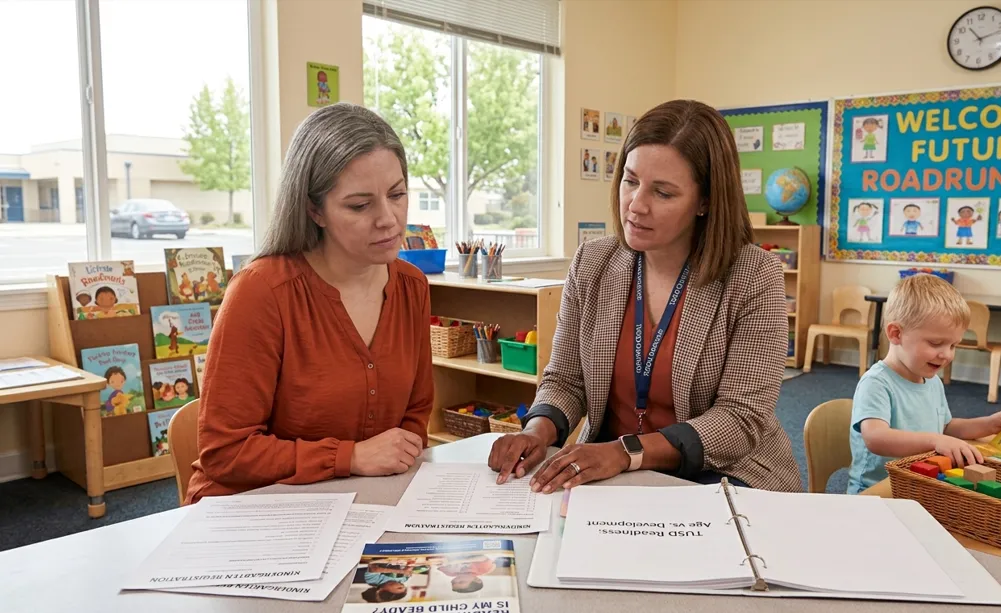
Academic Readiness: What Districts Actually Expect
Most kindergarten programs, including those in and around Tracy, expect children to arrive with some early academic exposure, though not full literacy or math fluency. Teachers are trained to build on a range of starting points.
Common academic readiness markers include:
- Recognizing most letters of the alphabet, though not necessarily all
- Understanding that letters correspond to sounds, even in a basic way
- Counting to ten or higher, and recognizing some numbers by sight
- Identifying basic shapes and colors
- Holding a pencil or crayon with reasonable control for drawing or early writing
- Showing interest in books, even if they can’t read independently yet
None of these need to be mastered before day one. What matters more is whether your child shows curiosity and some baseline exposure to these concepts, since kindergarten curriculum is designed to build these skills further, not assume they’re already complete.
How a Preschool Program Builds These Skills
A structured preschool program in the year or two before kindergarten typically introduces exactly these building blocks through age-appropriate activities like letter recognition games, counting songs, and guided pre-writing practice. If your child hasn’t had this kind of exposure yet, it doesn’t mean they’re behind. It means focusing on these areas in the months before enrollment can make a meaningful difference.
Social and Emotional Readiness
This is the category most kindergarten teachers actually say matters more than academics, and it’s the one most parents underestimate.
Ask yourself honestly:
- Can my child separate from me for several hours without prolonged, unmanageable distress?
- Can they take turns and share, even if reluctantly?
- Can they follow simple group instructions, like lining up or sitting during story time?
- Do they show some ability to manage frustration without a complete meltdown?
- Can they communicate a need or problem to an adult who isn’t me?
A child who struggles in one or two of these areas isn’t automatically unready. Kindergarten teachers are experienced at helping children build these skills in the first few months of school. What matters is that there’s some baseline foundation to build from, not full mastery.
Physical and Practical Readiness
Full-day kindergarten is a bigger physical undertaking than many parents expect, especially for a child coming from a shorter preschool day or home care.
Consider whether your child:
- Can manage a full day of activity without needing a nap, or can adjust to going without one
- Has the fine motor control to manage buttons, zippers, and using the bathroom independently
- Can handle transitions between activities without significant difficulty
- Has enough stamina to focus during structured activities for reasonable stretches of time
If your child still naps regularly, this isn’t disqualifying, but it’s worth gradually adjusting their schedule in the months before kindergarten starts so the shift isn’t abrupt.
A Simple Readiness Checklist by Category
| Category | Signs of Readiness |
|---|---|
| Academic | Recognizes letters and numbers, shows interest in books, holds a pencil with some control |
| Social | Separates from parents reasonably well, takes turns, follows group instructions |
| Emotional | Manages frustration without constant meltdowns, communicates needs to unfamiliar adults |
| Physical | Manages a full day without a nap, has basic self-care independence |
Use this as a general framework, not a strict pass or fail test. Most children will show strength in some categories and room to grow in others, and that’s exactly what kindergarten teachers expect to see on day one.
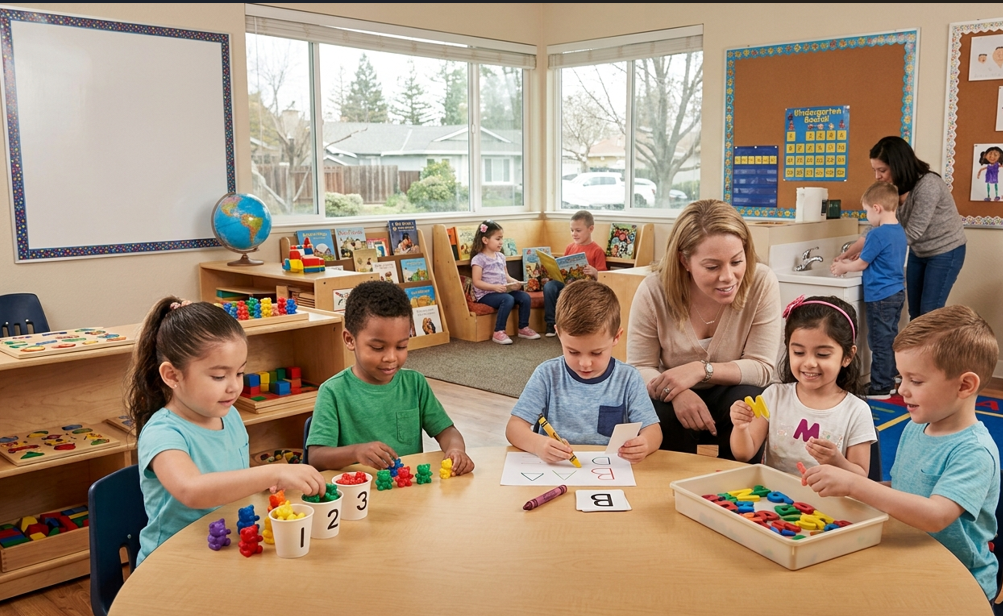
What If My Child Isn’t Fully Ready?
This is the part most checklists skip entirely, and it’s often the most useful section for anxious parents.
If your child is close to the cutoff age and shows several gaps across these categories, you have real options. Some families choose to delay kindergarten enrollment by a year, sometimes called academic redshirting, particularly for children with summer birthdays close to the cutoff. Others choose an additional year of a structured preschool program or transitional kindergarten, which many California districts now offer specifically to bridge this gap for children who could benefit from more time.
There’s no universally right answer here, and plenty of children who show readiness gaps in the spring before kindergarten adjust just fine within the first month of school. The decision often comes down to a combination of your child’s specific temperament, guidance from their current teacher or provider, and your own read on the situation.
How Daycare and Preschool Support This Transition
Consistent early childhood care in the year or two before kindergarten plays a meaningful role in building the readiness markers above, often more than parents realize.
A quality toddler program lays the groundwork for social skills and routine, while a structured preschool program builds directly toward the academic and independence skills kindergarten teachers look for. If you’re still evaluating providers, our complete guide to choosing daycare in Tracy and our breakdown of the signs of a high-quality daycare center both cover what to look for in a program that genuinely prepares children for this transition, rather than one that simply provides supervision.
If your child is younger and you’re wondering whether they’re ready for daycare in the first place, our guide on signs your child is ready for daycare covers that earlier stage in detail.
Questions to Ask Your Current Daycare or Preschool Provider
If your child is currently enrolled somewhere, their teacher is one of your best resources for an honest readiness assessment. Ask specifically:
- How does my child interact with peers compared to others in the same age group?
- Does my child follow group instructions and transitions well?
- What academic exposure has my child had so far, and where are the gaps?
- Would you recommend an additional year of preschool, or do you feel my child is ready to move forward?
Teachers who work with your child daily often have a clearer, more specific read on readiness than any general checklist can provide.
What Local Districts Say About Readiness
According to the California Department of Education’s kindergarten readiness guidance, readiness is best understood as a range of developmental skills rather than a fixed set of academic requirements, and districts are expected to support children entering with varying levels of preparation. The American Academy of Pediatrics also emphasizes that social-emotional readiness, including the ability to manage separation and follow routines, tends to predict a smoother kindergarten transition more reliably than early academic skills alone.
Trusting the Full Picture, Not a Single Signal
No single sign should determine your decision on its own. A child who isn’t yet reading isn’t behind. A child who occasionally struggles with sharing isn’t unready. What matters is the overall pattern across academic exposure, social comfort, emotional regulation, and physical stamina, paired with input from people who see your child regularly in a group setting.
Most children, even ones who show gaps in a few categories here, adjust well within the first month of kindergarten when the foundation from quality early childhood care is already in place.
Frequently Asked Questions
What are the signs my child is ready for kindergarten?
Key signs include recognizing letters and numbers, separating from parents without prolonged distress, following simple group instructions, and managing a full day of activity without needing a nap. No single sign is required, since readiness is best judged as an overall pattern across academic, social, emotional, and physical development.
Should I hold my child back a year before starting kindergarten?
This depends on your child’s specific readiness gaps, especially if their birthday is close to the enrollment cutoff, and is a decision best made alongside input from their current preschool or daycare teacher. Many districts also offer transitional kindergarten as a middle option for children who could benefit from additional time.
Does preschool actually help with kindergarten readiness?
Yes, a structured preschool program builds directly toward the academic and social skills kindergarten teachers expect, including early literacy exposure, following group routines, and peer interaction. Children with this foundation often transition more smoothly than those without any structured early childhood care.
What if my child isn’t reading yet before kindergarten?
This is normal and not a readiness disqualifier, since kindergarten curriculum is designed to build early literacy skills rather than assume children already read. What matters more is whether your child shows curiosity about books and some basic letter recognition.