Every parent asks this question at some point, usually while staring at a daycare tour brochure with a mix of excitement and guilt. Is my child actually ready for this, or am I pushing them into it too soon because I need to get back to work? The truth is, readiness for daycare isn’t a single milestone or a specific birthday. It’s a combination of developmental, emotional, and practical signals that, taken together, tell you whether your child is likely to adjust well.
This guide walks through what readiness actually looks like at different ages, what’s normal to worry about, and how to tell the difference between ordinary adjustment jitters and a sign that you might need to wait a little longer or choose a different type of care.
Why “Readiness” Doesn’t Mean What Most Parents Think
A lot of parents assume readiness means a child who is calm, independent, and won’t cry at drop-off. That’s an unrealistic bar, and almost no child, even a well-adjusted one, meets it on day one.
Readiness for daycare isn’t about whether your child will be upset at drop-off. Nearly every child experiences some adjustment period. Readiness is about whether your child has the developmental foundation to eventually settle into a group care environment and benefit from it, even if the first two or three weeks are rocky.
Understanding this distinction changes how you evaluate your own child. You’re not looking for a child who won’t miss you. You’re looking for a child equipped to handle the transition, even with some bumps along the way.
Readiness Looks Different by Age
Daycare readiness at six weeks old looks nothing like readiness at two years old, and the signals you should watch for shift significantly across developmental stages.
Infants (6 Weeks to 12 Months)
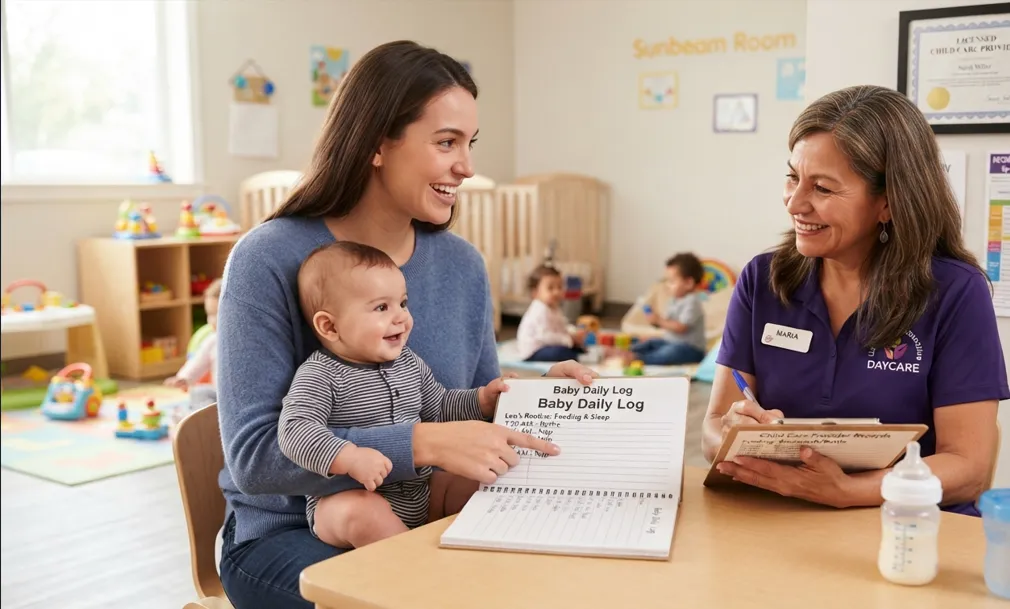
For infants, readiness is less about the baby and more about logistics and provider fit, since infants don’t have the developmental capacity to “prepare” for daycare the way an older child might.
Signs that timing and fit are right at this stage include:
- Your baby has a reasonably predictable feeding and sleep pattern, even if it’s not rigid
- You’ve found an infant care provider who can accommodate your baby’s specific feeding method, whether that’s bottle, breast milk, or a combination
- You feel confident communicating your baby’s routine and needs clearly to caregivers
- Your baby has had recommended vaccinations up to date for their age, which most licensed providers will require documentation of
At this age, readiness is really shared between you and the provider. A responsive, individualized program matters more than any specific developmental milestone your baby needs to hit first.
Toddlers (12 to 36 Months)
Toddlerhood is where parents start looking for more concrete readiness signals, partly because toddlers can communicate more and partly because separation anxiety becomes more noticeable at this stage.
Signs your toddler may be ready include:
- They can express basic needs through words, signs, or clear gestures, even if speech isn’t fully developed
- They show interest in other children, even if that interest looks like parallel play rather than direct interaction
- They can go a few hours without a parent present, such as with a grandparent or babysitter, without prolonged distress
- They’re on a semi-predictable nap and feeding schedule that a toddler program could reasonably accommodate
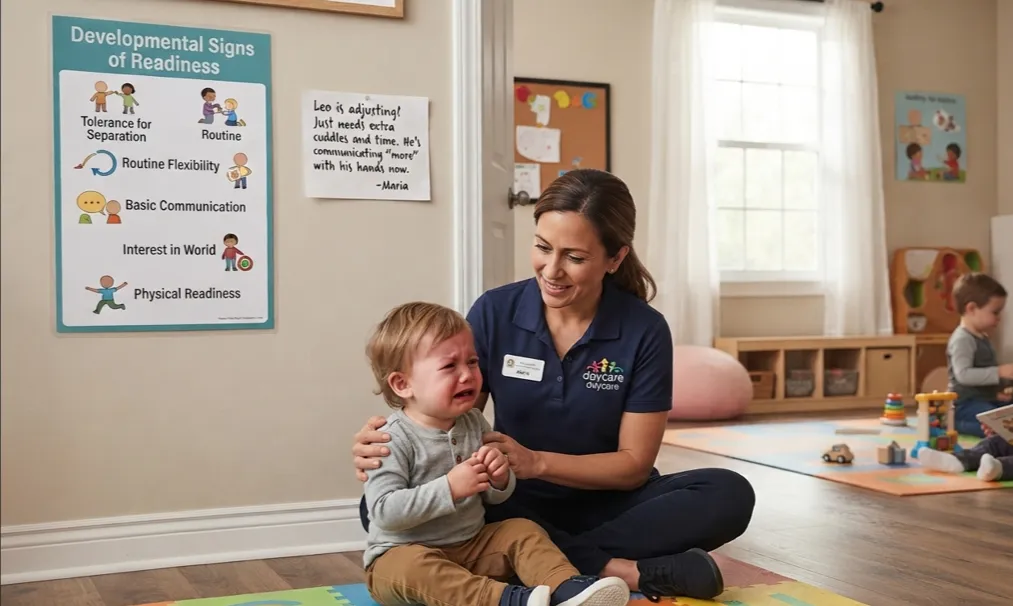
Separation anxiety peaks developmentally between 12 and 24 months for many toddlers, so don’t mistake a strong reaction at drop-off during this window as evidence your child isn’t ready. It’s often simply age-appropriate.
Preschool Age (3 to 5 Years)
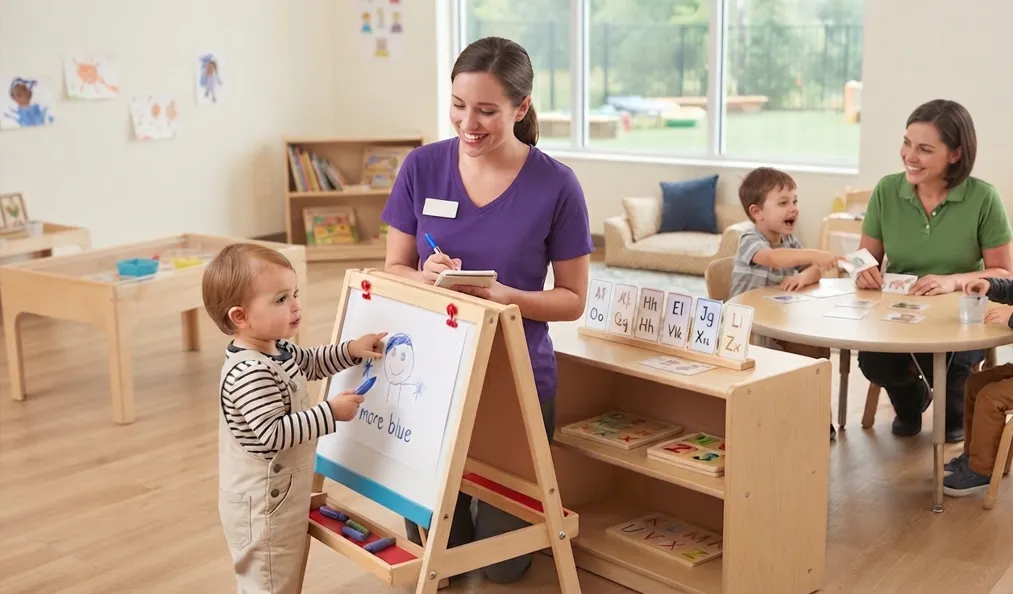
By preschool age, readiness signals become more about social and cognitive development, since children this age can benefit significantly from structured peer interaction and early academic exposure.
Look for:
- Growing interest in playing alongside or with other children, not just parallel play
- Ability to follow simple two-step instructions
- Some independence with basic self-care, like feeding themselves or attempting to use the bathroom, even if not fully potty trained
- Curiosity about letters, numbers, or storytelling, which a preschool program can build on meaningfully
At this stage, readiness also becomes about what your child stands to gain. Many preschoolers thrive on the structure, peer interaction, and early learning that daycare or preschool environments provide, even if they were previously happy at home.
Developmental Signs of Readiness, Regardless of Age
Beyond age-specific milestones, there are a handful of broader developmental signals worth watching across the board.
- Some tolerance for separation. Your child doesn’t need to be unfazed by your absence, but they should show some ability to be soothed by another trusted adult when you’re not there.
- Emerging routine flexibility. A child who can handle at least some variation in their daily schedule tends to adjust better than one who requires an extremely rigid routine to function.
- Basic communication of needs. Whether through words, gestures, or simple signs, your child should have some way to signal hunger, discomfort, or distress to an unfamiliar caregiver.
- Interest in the world beyond you. Curiosity about other children, toys, or new environments is a healthy sign that your child is ready to expand their social world.
- Physical readiness for the environment. This includes things like being able to sit up independently for infants, or being mobile enough to participate safely in toddler activities.
None of these need to be fully mastered. They’re signals of direction, not a checklist your child has to complete perfectly before enrollment.
Signs That Suggest You Might Wait, or Choose a Different Approach
Just as there are signs of readiness, there are signals worth paying attention to that might mean waiting a bit longer or choosing a smaller, more gradual care setting.
- Extreme distress that doesn’t ease at all even with a trusted, familiar caregiver present
- A recent major life change, such as a move, new sibling, or family disruption, that might make this a harder moment for a transition
- A significant illness or medical need that requires more individualized care than a group setting can currently provide
- Your own strong instinct that something feels off about the timing, even if you can’t fully articulate why
Trusting parental instinct matters here. You know your child’s temperament better than any general guideline can account for, and there’s no harm in waiting a few extra weeks or months if your gut is telling you to.
Emotional Readiness Versus Practical Necessity
It’s worth acknowledging something most articles on this topic skip over. Sometimes daycare enrollment isn’t really about whether your child shows every sign of readiness. It’s about needing to return to work, a schedule that simply doesn’t allow for more time at home, or logistical realities that don’t wait for perfect developmental timing.
This is completely normal, and it doesn’t mean you’re making the wrong choice. Most children, even ones who show few of the “ideal” readiness signs above, adjust successfully to daycare within the first few weeks when the provider is a good fit. Readiness signs are a helpful guide, not a strict gate that determines whether daycare will work for your family.
If you’re enrolling out of necessity rather than because every box is checked, focus your energy instead on choosing a high-quality provider and preparing your child as well as you can for the transition, both of which matter more than waiting for a perfect readiness moment that may never fully arrive.
How to Help Your Child Build Readiness Before Enrollment
If you have a few weeks or months before enrollment starts, there are concrete things you can do to help build readiness rather than just waiting for it to happen naturally.
- Practice short separations. Leave your child with a trusted relative or babysitter for a few hours at a time, gradually increasing duration.
- Establish a loose routine at home. Consistent nap times, meal times, and a simple daily rhythm make the eventual daycare schedule feel more familiar.
- Encourage social exposure. Playdates, library story times, or park visits with other children help build comfort with peer interaction.
- Talk about daycare positively and simply. Use age-appropriate language to describe what daycare will be like, focusing on the fun parts like new friends and activities.
- Visit the daycare together before the first full day. Many providers, including ours, welcome a short visit or trial day so your child can see the space with you present first.
What Readiness Looks Like From the Provider’s Side
Readiness isn’t only about your child. It’s also about whether a specific provider is equipped to support your child through that first adjustment period well.
Ask any daycare you’re considering how they specifically support children during their first two to three weeks, since this is covered in more depth in our guide on questions to ask during your daycare tour. A provider with a thoughtful, specific answer here is often better equipped to support a child who isn’t fully “ready” in the textbook sense, because good transition support can bridge that gap.
It’s also worth reviewing the broader markers covered in our guide on the signs of a high-quality daycare center, since a strong provider can meaningfully ease a readiness gap that might otherwise feel like a bigger obstacle.
For families still comparing overall options, our complete guide to choosing daycare in Tracy walks through how different care models, from infant care to preschool programs, align with different stages of readiness.
According to the Centers for Disease Control and Prevention’s early childhood development milestones, social and emotional development unfolds on a wide but predictable timeline, which is a useful reference point if you want to compare your own child’s development against general expectations rather than relying on anecdotal comparisons to other children. The American Academy of Pediatrics also offers guidance on easing separation anxiety, which can be a helpful resource if your child’s reaction to early drop-offs feels more intense than you expected.
A Simple Way to Think About Readiness
Rather than treating readiness as a pass or fail evaluation, think of it as a spectrum. Some children arrive at daycare fully ready by every measure and still have a hard first week. Others show very few of the “ideal” signs and adjust quickly because the provider is warm, consistent, and experienced with easing transitions.
The goal isn’t a perfect checklist. It’s an honest look at where your child currently stands, paired with a provider capable of meeting them there.
Frequently Asked Questions
What age is best for a child to start daycare?
There is no single best age, since readiness depends more on individual temperament and the provider’s approach than on a specific birthday. Many children successfully start anywhere from a few months old through preschool age, provided the caregiver is experienced with that age group.
Is it normal for my child to cry at daycare drop-off even if they’re ready?
Yes, separation anxiety is developmentally normal and often peaks between 12 and 24 months, even in children who are otherwise ready for daycare. Most children settle within two to three weeks with a consistent, supportive provider.
What if my child shows no signs of daycare readiness but I need to enroll them anyway?
Focus on choosing a high-quality, experienced provider and preparing your child through short practice separations and positive conversations about daycare. Most children adjust successfully even without hitting every readiness milestone beforehand.
How can I tell if my child needs more time before starting daycare?
Watch for extreme, unrelenting distress that doesn’t ease with any trusted caregiver, recent major family disruptions, or a strong parental instinct that the timing feels wrong. These are worth weighing seriously alongside practical scheduling needs.