
Finding the right Child Day Care in Tracy is one of the most important decisions you’ll make as a parent. Whether you’re returning to work, relocating to the area, or looking for an enriching environment for your little one, choosing a trusted childcare provider can make all the difference in your child’s development.
A quality daycare does much more than provide supervision. It offers a safe, nurturing space where children build confidence, develop social skills, and begin their educational journey through hands-on learning and play.
In this guide, we’ll cover everything parents need to know about selecting the best child day care in Tracy, including the benefits of early childhood education, what to look for in a daycare center, and how quality childcare helps children succeed both inside and outside the classroom.
Why Choosing the Right Child Day Care in Tracy Matters
The first five years of a child’s life are critical for brain development and learning. During these early years, children develop essential cognitive, emotional, physical, and social skills that shape their future success.
A professional childcare center provides opportunities for children to:
- Build confidence and independence
- Develop communication skills
- Learn through structured play
- Improve problem-solving abilities
- Build friendships and social skills
- Develop healthy routines
- Prepare for preschool and kindergarten
When children attend a nurturing daycare environment, they gain valuable experiences that support lifelong learning.
Benefits of Enrolling Your Child in a Daycare Program
1. Social and Emotional Development
One of the greatest advantages of daycare is daily interaction with other children.
Through group activities, children learn how to:
- Share toys and resources
- Work together
- Respect others
- Express emotions appropriately
- Build friendships
- Develop empathy
These early social experiences help children transition confidently into school environments.
2. Early Childhood Education
Quality daycare combines learning with fun through age-appropriate educational activities.
Children are introduced to:
- Alphabet recognition
- Numbers and counting
- Colors and shapes
- Storytelling
- Music and movement
- Arts and crafts
- Science exploration
- Sensory learning
Learning through play encourages creativity while building academic readiness.
3. Structured Daily Routine
Children thrive when they know what to expect each day.
A well-planned daycare schedule typically includes:
- Morning welcome
- Circle time
- Educational activities
- Outdoor play
- Healthy meals
- Nap or quiet time
- Creative play
- Storytime
Consistent routines help children feel secure while encouraging responsibility.
4. Building Confidence and Independence
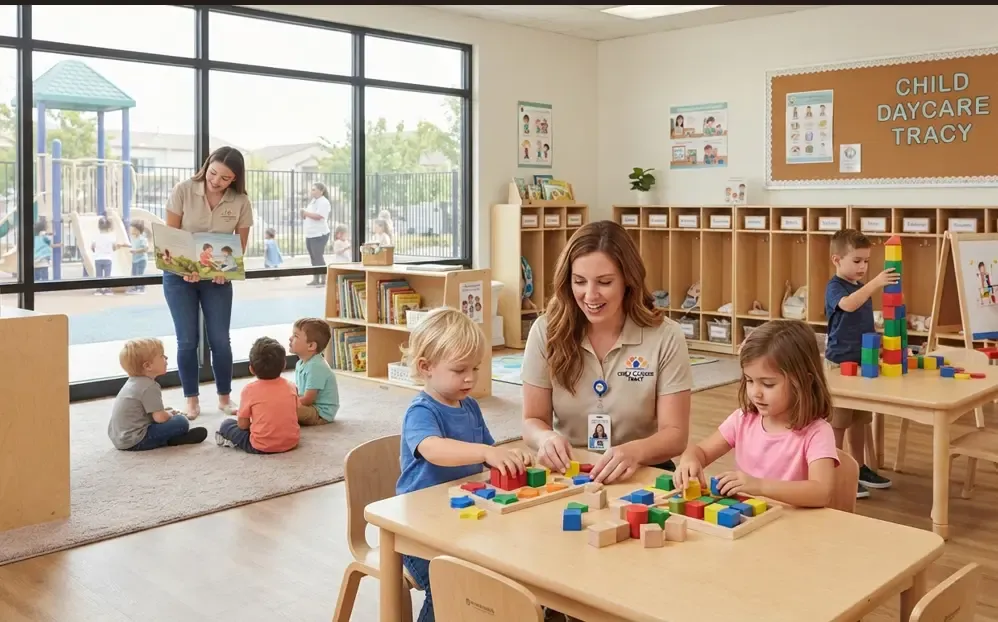
Daycare helps children become more self-reliant through everyday activities.
Children gradually learn to:
- Wash hands independently
- Put away toys
- Follow directions
- Solve simple problems
- Complete age-appropriate tasks
- Make choices confidently
These small achievements build lifelong confidence.
Childcare Programs Available in Tracy
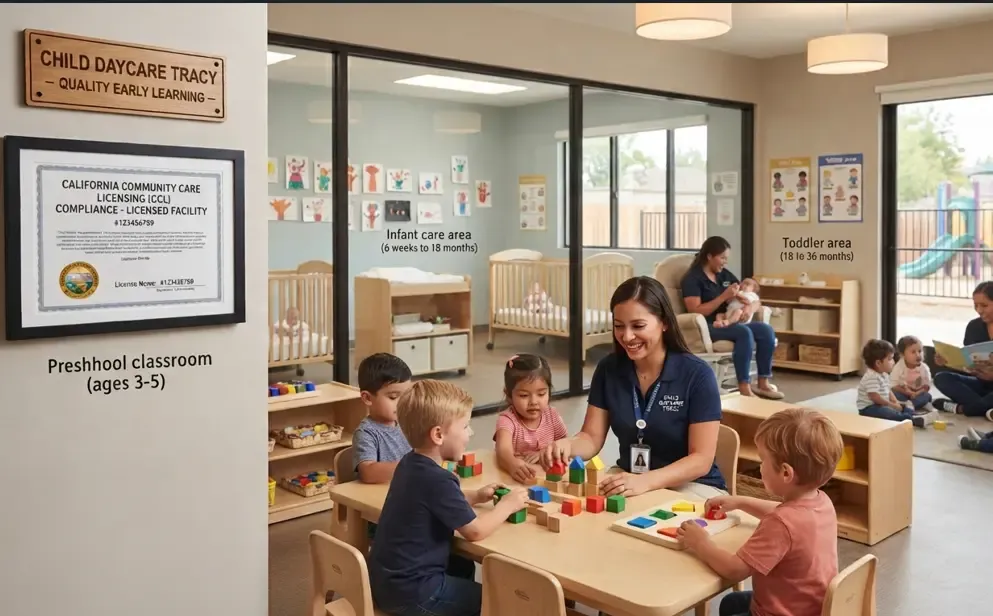
Choosing a daycare that offers age-specific programs ensures your child receives developmentally appropriate care.
Infant Care
Infants need nurturing caregivers who provide individualized attention and a safe environment.
Infant programs typically focus on:
- Safe sleep practices
- Sensory development
- Language development
- Tummy time
- Motor skill development
- Individual feeding schedules
Parents benefit from regular communication about their child’s daily progress.
Toddler Daycare
Toddlers are naturally curious and eager to explore.
Activities often include:
- Interactive learning
- Music and dance
- Outdoor play
- Language development
- Fine motor activities
- Social interaction
- Creative exploration
This stage encourages independence while supporting emotional development.
Preschool Programs
Preschool prepares children for academic success while making learning enjoyable.
Children develop:
- Early reading skills
- Writing readiness
- Number recognition
- Critical thinking
- Creativity
- Teamwork
- Listening skills
The balance of structured learning and imaginative play creates confident learners.
Before and After School Care
School-age children also benefit from engaging after-school programs.
These programs often include:
- Homework assistance
- Educational games
- STEM projects
- Outdoor recreation
- Arts and crafts
- Healthy snacks
Parents enjoy peace of mind knowing their children remain in a safe environment before and after school.
What to Look for in a Child Day Care Center
Not all daycare centers are the same. Here are the most important factors to consider when choosing childcare.
Qualified and Caring Teachers
Experienced caregivers create positive learning environments where children feel supported.
Look for staff who have:
- Early childhood education training
- CPR and First Aid certification
- Professional experience
- Strong communication skills
- A genuine passion for working with children
Safe and Secure Facilities
Safety should always be your top priority.
A trusted daycare should provide:
- Secure entrances
- Clean classrooms
- Sanitized toys
- Safe playgrounds
- Emergency preparedness plans
- Health and safety policies
Parents should always feel confident about their child’s wellbeing.
Small Class Sizes
Lower teacher-to-child ratios allow children to receive more personalized attention.
Benefits include:
- Better supervision
- Stronger relationships
- Individualized learning
- Improved classroom management
Children thrive when caregivers can focus on their unique needs.
Age-Appropriate Curriculum
An effective childcare curriculum encourages exploration while supporting development.
Look for programs that include:
- Literacy development
- Math readiness
- Creative arts
- Science exploration
- Music
- Physical activities
- Social-emotional learning
Learning should always be engaging and fun.
Parent Communication
Strong communication creates a successful partnership between parents and caregivers.
The best daycare centers provide:
- Daily reports
- Progress updates
- Parent conferences
- Open communication
- Classroom updates
Keeping parents informed helps support children’s growth at home and school.
Questions to Ask Before Choosing a Daycare
Before enrolling your child, schedule a tour and ask questions such as:
- What does a typical daily schedule look like?
- What curriculum do you follow?
- How do you communicate with parents?
- What qualifications do your teachers have?
- What safety measures are in place?
- How do you handle behavior guidance?
- Are meals and snacks provided?
- How do you prepare children for kindergarten?
Visiting the daycare allows you to observe the environment and determine whether it’s the right fit for your family.
Why Families Choose Child Day Care Tracy
Families throughout Tracy choose professional childcare because they want more than a babysitting servicethey want a place where their children feel safe, supported, and encouraged to grow.
A quality child daycare provides:
- Experienced and caring educators
- Safe learning environments
- Age-appropriate educational programs
- Daily structured routines
- Interactive learning experiences
- Strong family communication
- Individual attention for every child
These elements create an environment where children build confidence while developing important life skills.
Tips for Preparing Your Child for Daycare
Starting daycare is a big milestone for both children and parents.
To make the transition easier:
- Visit the daycare together before the first day.
- Establish a consistent morning routine.
- Pack comfort items if allowed.
- Talk positively about daycare.
- Keep goodbyes short and reassuring.
- Communicate with teachers about your child’s needs.
A smooth transition helps children feel secure and excited about their new environment.
Frequently Asked Questions
What is the best age to start daycare?
Many children begin daycare as infants, while others start during the toddler years. The right time depends on your family’s needs and your child’s readiness.
What should I look for during a daycare tour?
Observe cleanliness, teacher interactions, classroom safety, learning activities, and how children engage with staff.
Does daycare help prepare children for kindergarten?
Yes. Quality daycare programs focus on early literacy, social skills, independence, and classroom routines that prepare children for school.
How can I help my child adjust to daycare?
Maintain a consistent routine, speak positively about daycare, and work closely with teachers during the transition period.
Final Thoughts
Choosing the right Child Day Care in Tracy is an investment in your child’s future. A trusted childcare center provides more than a safe place to spend the day—it creates opportunities for learning, social development, creativity, and personal growth.
Whether you’re searching for infant care, toddler programs, preschool education, or before and after-school care, selecting a high-quality daycare ensures your child receives the support they need to thrive.